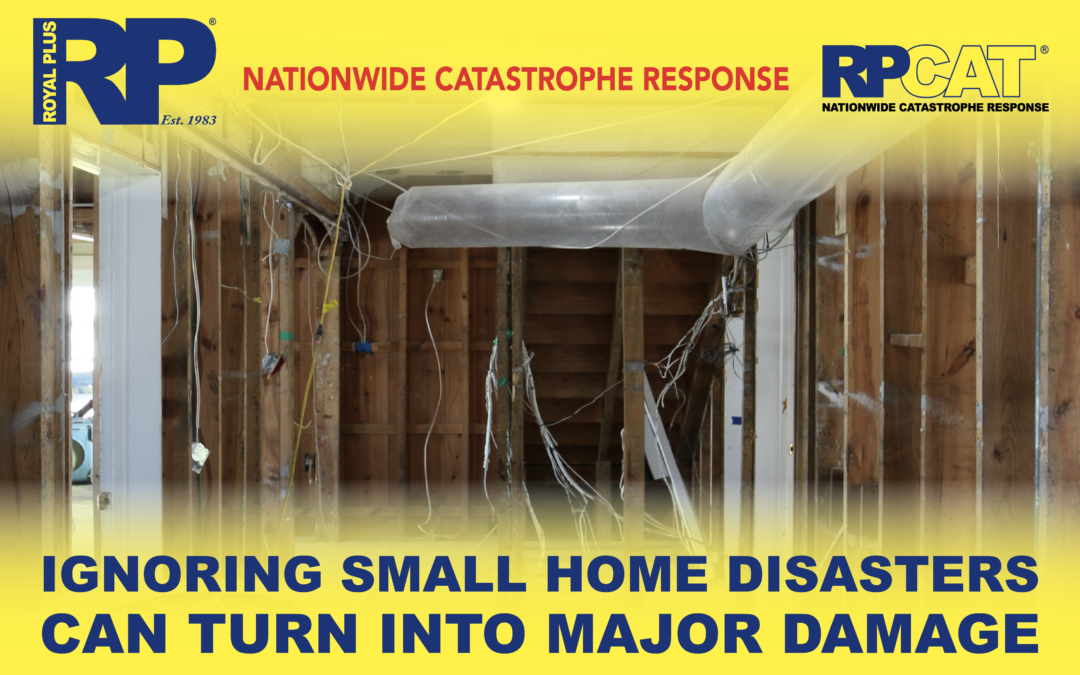
Small Home Disasters That Can Turn Into Major Damage if Ignored
Minor Issues Often Cause the Most Expensive Repairs
Many homeowners associate disasters with large, obvious events like floods or fires. In reality, some of the most costly damage begins with issues that seem minor at first. A slow leak, small roof breach, or minor appliance failure can quietly cause extensive damage over time.
Because these problems don’t always create immediate disruption, they are often ignored until visible damage appears.
Slow Water Leaks Are One of the Most Common Causes of Home Damage
Slow leaks under sinks, behind toilets, or inside walls can go unnoticed for weeks or even months. During that time, moisture can spread into surrounding materials, weakening drywall, flooring, and structural components.
By the time stains or odors appear, damage has often extended far beyond the original source. Early mitigation can prevent mold growth and reduce the need for major repairs.
Storm Damage Is Not Always Obvious
After a storm, damage may not be immediately visible from inside the home. Small roof penetrations, loose siding, or compromised flashing can allow water to enter gradually with each rainfall.
Without mitigation, this slow intrusion can lead to insulation damage, interior staining, and hidden mold growth. A professional assessment after severe weather helps identify issues before they escalate.
Appliance and HVAC Failures Can Cause Widespread Damage
Washing machines, water heaters, and HVAC systems are common sources of water damage in residential homes. Even brief malfunctions can release large amounts of water into living spaces.
When these issues occur, immediate mitigation helps limit damage and prevents moisture from spreading into adjacent rooms or structural areas.
Early Mitigation Protects Your Home Long-Term
Addressing small issues quickly can significantly reduce repair costs and prevent long-term damage. Disaster mitigation focuses on stopping problems early, drying affected areas properly, and stabilizing the home before damage worsens.
For homeowners, recognizing early warning signs and acting promptly is one of the most effective ways to protect their property and avoid major disruptions.
Recent Comments