 Professional Drying Is More Than Removing Standing Water
When water enters carpet, drywall, wood, flooring or other porous building materials, removing the standing water is only the first step. A significant amount of moisture can remain trapped within materials and assemblies even after surfaces appear dry.
Royal Plus uses professional water damage restoration and structural drying methods to help remove that remaining moisture. Air movers, dehumidifiers and ongoing moisture monitoring work together to create a controlled drying environment and help move an affected structure toward dry conditions.
What Do Air Movers Do After Water Damage?
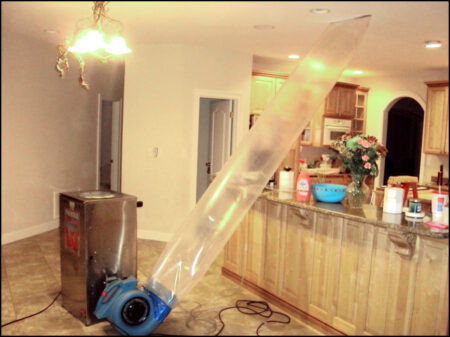
Air movers are designed to accelerate evaporation by moving air across wet surfaces. As airflow passes over affected materials, it helps disrupt the humid layer of air that can sit directly above the surface and encourages moisture within porous materials to move into the surrounding air.
During professional structural drying, Royal Plus technicians may position multiple air movers throughout an affected area to create controlled airflow across wet materials rather than simply blowing air randomly through a room.
- Move drier air across wet surfaces
- Increase airflow at the surface of affected materials
- Help disrupt humid air immediately above wet materials
- Encourage moisture within porous materials to evaporate into the surrounding air
Why Are Dehumidifiers Needed?
Evaporation alone does not solve the problem. As moisture leaves wet materials, it enters the surrounding air as water vapor, increasing the humidity inside the affected space. If that moisture is not removed from the air, the environment can become increasingly humid and the drying process can slow.
Professional dehumidifiers remove moisture from the air and lower humidity, helping maintain conditions that allow additional moisture to continue evaporating from affected materials.
Wet Materials → Evaporation → Moisture Enters the Air → Dehumidification → Drier Air → Continued Evaporation
How Royal Plus Monitors the Structural Drying Process
Professional water mitigation is not simply a matter of placing fans and waiting. Royal Plus technicians monitor drying conditions throughout the process so equipment and drying strategies can be evaluated as conditions change.
- Temperature
- Relative humidity
- Moisture levels within affected materials
- Overall drying progress and environmental conditions
Air movers help release moisture from affected materials. Dehumidifiers help remove that moisture from the air. Moisture monitoring helps the restoration team evaluate whether the structure is continuing to dry.
Why Professional Water Damage Restoration Matters
A property can look dry on the surface while moisture remains inside drywall, flooring, wood and other materials. A professional drying approach helps identify and address moisture that may not be obvious during a visual inspection.
Royal Plus provides emergency water mitigation and restoration services for residential, commercial and large-loss properties. Our teams use professional drying equipment, moisture documentation and field monitoring to support an organized response from initial water removal through structural drying.
For commercial facilities, multifamily properties, schools, healthcare environments and other large or complex losses, the drying plan may require substantial equipment, coordinated monitoring and adjustments as site conditions change.
Frequently Asked Questions About Air Movers and Dehumidifiers
Why do restoration companies use so many air movers?
Multiple air movers may be needed to create controlled airflow across the various wet surfaces and materials within an affected area. Equipment placement depends on the conditions and drying needs of the loss.
Why isn’t water extraction enough?
Extraction removes standing or recoverable water, but moisture can remain within porous building materials. Structural drying helps address moisture that remains after the initial water removal.
Why are dehumidifiers used with air movers?
Air movers encourage moisture to evaporate from wet materials into the air. Dehumidifiers then remove moisture from that air, helping maintain an environment that supports continued drying.
How do technicians know when materials are drying?
Restoration technicians monitor environmental conditions and material moisture levels throughout the drying process to evaluate progress.
Can a building look dry and still contain moisture?
Yes. Surfaces may appear dry even when moisture remains within porous materials or building assemblies, which is why professional moisture monitoring is an important part of structural drying.
Need Emergency Water Damage Restoration?
When water damage occurs, fast action and proper drying are important. Royal Plus provides professional water mitigation, structural drying and restoration support for residential, commercial and large-loss properties.
Contact Royal Plus for 24/7 emergency restoration assistance.
Recent Comments