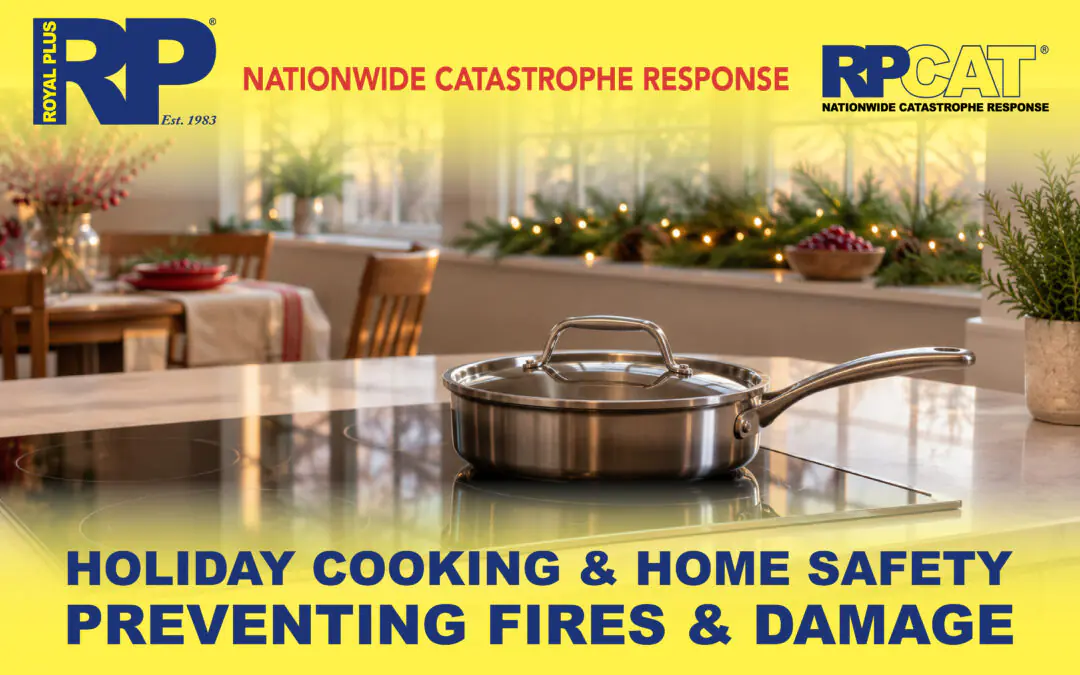
Holiday cooking safety starts with staying close to the stove. When several dishes are cooking and guests are arriving, it’s easy to step away from a pan for longer than you intended. A few simple habits can help prevent kitchen fires. It also helps to know how to respond if a fire starts and where to look for damage once emergency responders say it’s safe to return.
1. Practice Holiday Cooking Safety at the Stove
Stay in the kitchen while frying, broiling, or cooking on the stovetop. If you need to step away, turn off the burner. When roasting a turkey or baking other dishes, stay home, check the food regularly, and use a timer.
- Keep towels, paper products, packaging, and decorations away from the stove.
- Keep children and pets at least three feet from the cooking area.
- Keep a lid or baking sheet nearby to cover a small pan fire.
- Follow the manufacturer’s directions for cooking appliances and avoid overloading outlets.
If fried turkey is on the menu, the National Fire Protection Association recommends buying one already cooked or using a fryer that cooks without oil. NFPA Thanksgiving safety tips
2. Know What to Do if a Grease Fire Starts
If a small fire stays inside the pan and you can act safely with a clear way out, slide a metal lid or baking sheet over the pan. Turn off the burner and leave the pan covered until it cools completely. Never move a burning pan or pour water on it. Water can splatter burning oil and spread the fire.
If flames spread beyond the pan or you’re unsure you can cover it safely, get everyone outside and call 911 from a safe location. NFPA cooking fire guidance
3. Test Smoke Alarms and Review Your Escape Plan
Test your smoke alarms every month and follow the manufacturer’s maintenance instructions. Before guests arrive, make sure everyone in the household knows two ways out of each room and where to meet outside. U.S. Fire Administration home escape planning guide
4. Look for Smoke and Soot Beyond the Kitchen
Even a small kitchen fire can leave smoke odors and soot in nearby rooms. Once emergency responders say it’s safe to reenter, look for dark residue on walls or ceilings, discoloration on furniture, and a smoke smell that persists.
Check with a restoration professional before scrubbing soot from painted surfaces, upholstery, or belongings. The right cleaning method depends on the material and the type of residue. Learn more about Royal Plus fire and smoke damage restoration.
5. Check for Water Damage After Firefighting
Water used to put out a fire can soak into flooring, drywall, cabinets, and belongings. It can also reach rooms below or next to the kitchen. Once emergency responders clear the property, a restoration professional can assess where moisture spread and determine what needs drying. Learn more about Royal Plus water removal and structural drying.
Protect Your Home This Holiday Season
Put holiday cooking safety into practice before guests arrive. Clear the stovetop, test your smoke alarms, and review your escape plan. If a fire does occur, focus on getting everyone out safely. Once emergency responders clear your home, Royal Plus can help assess fire, smoke, soot, and related water damage.
Recent Comments